
White Cane: What Blind users care about?
Before You Buy a Smart Cane: What Blind Users Care About
If you’re looking at smart cane options right now, you’re probably curious—but skeptical.
New devices promise more awareness, fewer collisions, and smoother navigation. At the same time, many people who move through cities every day know that added technology can also mean added weight, more decisions, and new points of failure.
This article isn’t a recommendation list.
It’s a way to think clearly before buying anything.
By the end, you should feel more confident asking the right questions—and more comfortable waiting if nothing fits your life yet.

What people usually mean by “smart cane”
The term gets used loosely. In practice, it can mean several different things:
A white cane with electronics built into the handle
Devices designed to replace the cane entirely
Phone-first systems that rely on apps and sensors
Confusion starts when these very different approaches are treated as the same product category.
Weight and balance matter more than features
The first thing most people notice isn’t what the tech does.
It’s how the cane feels.
Adding electronics usually shifts weight toward the handle. That changes balance, swing, and rhythm. On a short demo, this might feel manageable. On a 30–60 minute walk, it can become tiring.
A useful question to ask yourself is simple:
How will this feel after half an hour, not five minutes?
If the answer is unclear, that’s worth paying attention to.
Durability and disposability are part of safety
White canes get dropped.
They hit curbs, door frames, buses, puddles, and rain.
Standard canes are designed for this. They’re light, durable, and easy to replace. When electronics are added, the risk changes. Repairs take time. Replacements cost more. A damaged device can mean losing support for days or weeks.
This doesn’t make smart canes wrong.
It does mean the trade-off is real.
Haptic cues: helpful signal or extra noise?
Many smart canes rely on vibration to communicate information.
For some users, this works well. For others—especially those who use constant contact—vibration can compete with tactile feedback from the ground. Interpreting multiple signals at once takes mental effort, particularly in busy environments.
A question worth asking:
Will this help me decide faster, or make me interpret more while I’m moving?
Phone dependence changes how “smart” works
Most modern assistive tech is connected to a phone. That brings benefits, but also dependencies:
Bluetooth reliability
Battery life of both devices
App stability
Cloud delays or offline limits
When something stops working, the system often becomes less helpful quickly.
This isn’t about avoiding phones.
It’s about understanding how much the device depends on them to function.

Replacement vs layering: two different approaches
Most products fall into one of two design philosophies.
Replacement-focused tools
These aim to become the primary mobility tool. They often emphasize hands-free use and reduced reliance on the cane. This requires transferring trust from a familiar tool to a new one.
Layered support tools
These keep the cane as the base and add information or awareness elsewhere. Control stays with the user. Technology supports, rather than leads, movement.
Neither approach is inherently right or wrong. They simply involve different trade-offs.
The question that ties everything together
When evaluating any smart cane or mobility device, one question matters more than the rest:
Does this add information—or add decisions?
Information helps when it reduces uncertainty.
Decisions slow you down when you’re already navigating a complex space.
The most useful support often feels quieter than expected.
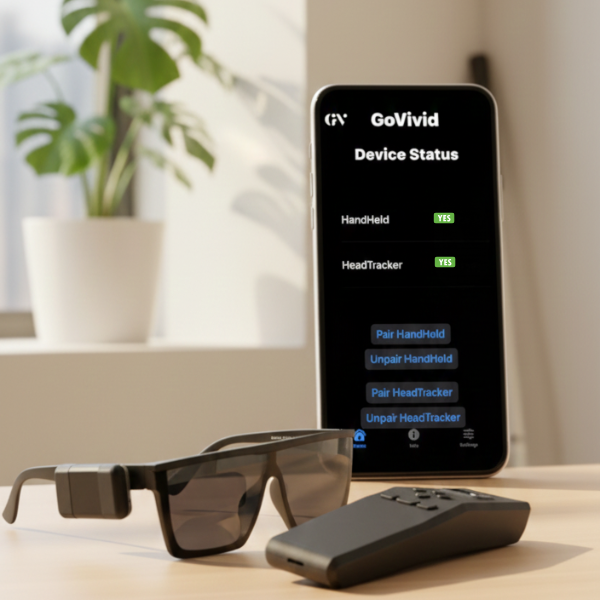
Where DirectMe fits
GoVivid approaches this differently.
DirectMe is designed around the idea that the white cane remains unchanged, trusted, and disposable. Instead of putting intelligence into the cane itself, the system distributes support across:
Head-worn sensing for orientation and spatial awareness
Handheld or cane-adjacent hardware that doesn’t replace the cane
A phone app that coordinates information between these parts
The goal isn’t to add more signals.
It’s to reduce decision-making while moving through urban, mixed indoor–outdoor spaces.
Ask these questions before buying anything
Before you commit to a smart cane or device, pause and ask:
Will this change how my cane feels over time?
What happens if it fails mid-walk?
Does it demand attention while I’m moving?
Can I stop using it without losing safety?
Is it giving me clarity—or asking me to interpret more?
Clear answers matter more than feature lists.
Clarity over accumulation
You don’t need to buy the newest tool to move well.
Sometimes, choosing not to buy is the right decision.
The best assistive support fits quietly into how you already navigate. It respects your skills and reduces unknowns instead of adding complexity.
For those who want to help shape what comes next, GoVivid invites blind users and O&M professionals to take part in the Early Adopter Program—a way to contribute feedback and real-world insight, not a pressure to purchase.
The right support is often quieter than expected.